
Student Discipline Appeals Procedures: an Overview
Cristina Pietri • April 11, 2023

Last month, we discussed an overview of the student disciplinary process, since the early stages such as investigations, and we learned about student disciplinary hearings. Thus, it’s logical to give you a few helpful pieces of information about the process to follow when the outcome of a student disciplinary case is not what you had hoped for. That is, the results were not --in whole or in part— adjudicated to your favor.


After the hearing and/or investigation has concluded, the Student Conduct Office, the Dean of Students, or the office in charge of enforcing the Student Code of Conduct will notify you of the outcome of your case in a decision letter within the time frame designated in the Student Code or Student Handbook. The decision letter tends to quote the Student Code of Conduct’s disposition under which the notification of the decision is required, it states the conclusions of the investigation or hearing, and the grounds for their decision. It should also have a statement of your right to appeal and a time frame to do so. Every university is different, and such deadlines could range from 48 hours to 30 days.


The first and most important thing to do is to find out the deadline to appeal. Once you are aware of the term, you should look for how “day” is defined in the Student Code or Student Handbook. Some universities define “day” as a natural day, some define it as a business day, whereas others define it as a school day. This is crucial because it’s possible that your interpretation of “day” differs from its definition leading you think you have more time to file your appeal letter, and you don’t want to risk the appeal to be denied for tardiness without ever being considered on its merits. 


Once you are certain of the due date of the appeal letter, set realistic expectations and be honest with yourself. Are you able to go through the appeal process by yourself? Do you fully understand the Student Conduct Code or Student Handbook and know how to apply it to the adverse decision? Do you have time to prepare an appeal letter that you feel is compelling enough to overturn the decision? If you are unsure of any of these questions, you should consider contacting a Student Advisor or an attorney with experience in student disciplinary proceedings. Lately, these proceedings are turning more complex and many students, particularly undergraduate students-- do not have the knowledge or skills to successfully argue in their behalf. On the other hand, graduate students tend to have less time available due to the academic workload but want to defend their costly investment in their future.  Lento Law Group and Lento Law Firm have a team of attorneys and support staff who dedicate exclusively to these types of cases. They have worked with hundreds of student cases just like yours and they have the expertise and knowledge to advise you and assist you with your appeal.

If you do believe you have the time, resources, and skills to go through with this appeal by yourself, it’s crucial that you thoroughly read the decision later and the grounds for their decision. Next, you must read the Student Code Handbook and understand the appeal process as set by the school. Commonly, the Student Handbook should list the grounds on which you should base your appeal. For example, a procedural error, bias from the person or persons in charge of your decision, or new evidence has emerged that couldn’t be discovered previously and it has a potential to change the outcome. 


Next, you should ask yourself if what you need reversed could fit in one or more grounds stated in the Handbook for your appeal. What was the procedural error? Do you have evidence of bias from the adjudicator? What is the new evidence and why is it likely to change the school’s decision? 

Once you have identified the grounds under which your appeal will be based, it’s time to draft the appeal letter. Choose your words carefully, and make sure you state the reasons for your disagreement with the decision and/or with the severity of the sanctions imposed. 


If the evidence against you was compelling and/or the finding of facts is somewhat accurate, you should also mention regret for the behavior or circumstances that started the process. Make sure you mention any mitigating factors (such as physical or mental illnesses, living arraignment problems, financial difficulties, family problems at home, or relationship problems,  etc.). It is advisable to mention your current and future contributions to the university:  if you’re part of a sports team, or if your academic credentials are above average, or if you belong to a club or organization in the school. If applicable, you should argue that you have no previous incident with disciplinary action or investigation and that the current one is an unfortunate isolated incident. Make sure that you include a plan for future success, It also helps if you ask someone to read the appeal and give you feedback.


Once you are satisfied with your letter, it’s time to send it. Always make sure you send the letter to the correct official, which usually isn’t the person or panel who adjudicated the matter. It’s also good practice to send a copy of the appeal to the official or panel who decided the sanctions you’re asking to reconsider. 


Oftentimes, the official in charge of the appeal has a term to decide about the appeal, but not all universities have one. In some instances, there could be an appeal hearing where you argue your case. In this instance, it’s helpful to assess again whether you are prepared to appear in a hearing before trained and experienced school officials all by yourself. I strongly advise that, in these stages, to not appear to the hearing by yourself, and to have a student advisor or attorney appear with you in the hearing. Further articles will discuss the appeal hearings in more detail. 


Once the university has reached a decision, it will also be notified to you in a similar matter as the decision letter. Depending on the outcome and the university’s guidelines, that decision might be final or on the contrary, it’s possible to have the right to another appeal to a higher ranking official, usually a Provost. 


As you can see, what at first might seem like a simple and straightforward procedure has many ramifications which could permanently impact your entire future. 


The previous information is not intended to substitute legal advice, it is only for informative purposes. Every case is different, and an education attorney or student advisor is best educated, trained and experienced to provide you with professional advise that will adjust to your particular needs. If you would like to know more, please contact ______ (which number/ email should I include?)


  • Student Handbook reference
  • Cover the usual grounds for appeal
  • Cover the process of appeal
  • Tips to write an appeal. 
  • Hiring an attorney completely changes the dynamics
  • Attorneys are expert interpreting and analyzing policies 
  • Go over to the sections they male reference in every communication: like “ according/ pursuant to sections XYZ
  • Make sure the terms of the decision are defined somewhere in the handbook: pay close attention
  • Make examples of academic misconduct terms
  • When writing the appeal letter, the self-introspection required can be illuminating, especially for the student. This is a humbling opportunity to evaluate what went wrong, consider any mitigating factors (including physical or mental illnesses, roommate problems, financial stresses, family problems at home, etc). And it is an opportunity to describe what will be different in the next semester. (Getting adequate medical treatment, solved roommate issues, settled finances, or improved family issues, etc.)
  • Appeal Hearing
  • Sometimes the appeal hearing is about questions about the evidence, not the facts
  • Usually done by other office or department of 
  • Outcomes
  • Denial
  • What a denial letter should have
  • What’s the next steps
  • Reversal: 
  • What the reversal should look like
  • What can be done

More News & Resources
January 17, 2026
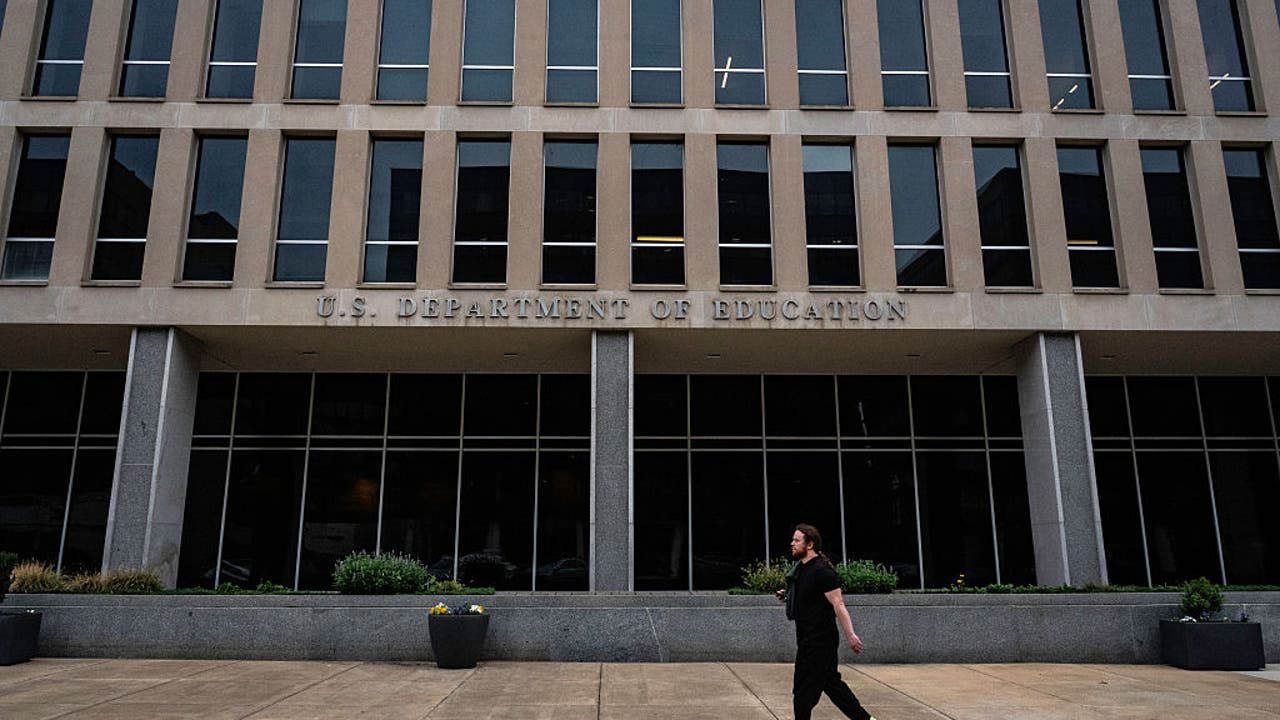
WASHINGTON (AP) — Before President Donald Trump’s administration started dismantling the Education Department, the agency served as a powerful enforcer in cases of sexual violence at schools and universities. It brought the weight of the government against schools that mishandled sexual assault complaints involving students. That work is quickly fading away. The department’s Office for Civil Rights was gutted in Trump’s mass layoffs last year, leaving half as many lawyers to investigate complaints of discrimination based on race, sex or disability in schools. Those who remain face a backlog of more than 25,000 cases. Investigations have dwindled. Before the layoffs last March, the office opened dozens of sexual violence investigations a year. Since then, it’s opened fewer than 10 nationwide, according to internal data obtained by The Associated Press. Yet Trump’s Republican administration has doubled down on sexual discrimination cases of another kind. Trump officials have used Title IX, a 1972 gender equality law, against schools that make accommodations for transgender students and athletes. The Office for Civil Rights has opened nearly 50 such investigations since Trump took office a year ago. Even before the layoffs, critics said the office was understaffed and moved too slowly. Now, many firms that handle Title IX cases have stopped filing complaints, calling it a dead end. “It almost feels like you’re up against the void,” said Katie McKay, a lawyer at the New York firm C.A. Goldberg. “It feels like a big question mark right now,” she said. “How are we supposed to hold a school accountable once it has messed up?” An Education Department spokesperson said the office is working through its caseload, blaming President Joe Biden’s Democratic administration for leaving a backlog and rewriting Title IX rules to protect LGBTQ+ students. Trump officials rolled back those rules. “The Trump Administration has restored commonsense safeguards against sexual violence by returning sex-based separation in intimate facilities,” spokesperson Julie Hartman said. “OCR is and will continue to safeguard the dignity and safety of our nation’s students.” Students have few other places to turn The layoffs have slowed work at the Office for Civil Rights across the board, but it has an outsize impact on cases of sexual violence. Students who are mistreated by their schools — including victims and accused students alike — have few other venues to pursue justice. Many are now left with two options: File a lawsuit or walk away. One woman said she’s losing hope for a complaint she filed in 2024. She alleges her graduate school failed to follow its own policies when it suspended but didn’t expel another student found by the school to have sexually assaulted her. No one has contacted her about the complaint since 2024. The woman recently sued her school as a last resort. She said it feels like a David and Goliath mismatch. “They have all the power, because there is no large organization holding them accountable. It’s just me, just this one individual who’s filing this simple suit,” the woman said. The AP does not typically identify people who say they are victims of sexual assault unless they grant permission. The civil rights office is supposed to provide a free alternative to litigation. Anyone can file a complaint, which can trigger an investigation and sanctions for schools that violate federal law. In 2024, the agency received more than 1,000 complaints involving sexual violence or sexual harassment, according to an annual report. It’s unclear how many complaints have been filed more recently. Trump’s administration has not reported newer figures. In conversations with the AP, some staffers said cases are piling up so quickly they can’t track how many involve sexual violence. In December, the department acknowledged the civil rights backlog and announced dozens of downsized workers would be brought back to the office amid a legal challenge to their layoffs. The workers’ return offers some hope to those with pending civil rights complaints. Department officials have vowed to keep pushing for the layoffs. Historically, the feds have held schools and colleges accountable Before Trump was elected to his second term, the office had more than 300 pending investigations involving sexual assault, according to a public database. Most of those cases are believed to be sitting idle as investigators prioritize easier complaints, according to staffers who spoke on the condition of anonymity for fear of retribution. The details of past cases underscore the urgency of the work. In 2024, the office took action against a Pennsylvania school system after a girl with a disability told staff she had been sexually touched by a bus driver. She was put back on that driver’s bus later that afternoon, plus the next two days. The district was required to designate a Title IX coordinator for its schools, review previous complaints and consider compensation for the girl’s family. That year, the office demanded changes at a Montana school where a boy was pinned down by other students and assaulted after a wrestling practice. The students had been suspended for three days after school officials treated it as a case of hazing instead of sexual assault. In another case, the office sided with a University of Notre Dame student who had been expelled over accusations of sexual misconduct. The student said the college never told him precisely what he was accused of and refused to interview witnesses he put forward. Cases that get attention from the federal office are being handled under federal rules created during Trump’s first term. Those rules were designed to bolster the rights of students accused of sexual misconduct. Lawyers who work with accused students see little improvement. Justin Dillon, a Washington lawyer, said some of his recent complaints have been opened for investigation. He tells clients not to hold their breath. Even before the layoffs, cases could drag on for years, he said. Others gave up on the office years ago. The LLF National Law Firm said it stopped filing complaints in 2021 in favor of suing schools directly. Lawyers at the firm said the office had become incapable of delivering timely outcomes, which was only worsened by the layoffs. Complaints can be resolved several ways. They can be dismissed if they don’t pass legal muster. Many go to mediation, akin to a settlement. Some end in voluntary agreements from schools, with plans to rectify past wrongs and prevent future ones. In 2024, under Biden, the office secured 23 voluntary agreements from schools and colleges in cases involving sexual violence, according to a public database. In 2018, during Trump’s first term, there were 58. Since Trump took office again last year, there have been none. The dismantling of the Office for Civil Rights comes as a blow to Laura Dunn, a civil rights lawyer who was influential in getting President Barack Obama’s Democratic administration to make campus sexual assault a priority. As the issue gained public attention, the office started fielding hundreds of complaints a year. “All the progress survivors have made by sharing their story is being lost,” said Dunn, who’s now a Democratic candidate for Congress in New York. “We are literally losing civil rights progress in the United States, and it’s pushing us back more than 50 years.” ___ The Associated Press’ education coverage receives financial support from multiple private foundations. The AP is solely responsible for all content. Find the AP’s standards for working with philanthropies, a list of supporters and funded coverage areas at AP.org.
By By: Joseph D. Lento September 8, 2025 September 12, 2025
Artificial intelligence continues to make big changes on school campuses at all levels nationwide. Students have already learned how helpful AI tools can be for studies. Yet students have also experienced a frightening wave of school academic misconduct charges alleging misuse of those AI tools. LLG National Law Group’s premier attorneys have rallied to the defense of students accused of AI misuse, defending and defeating school misconduct charges for students at all levels nationwide. But the latest wave of AI chatbot tools threatens to once again transform the school misconduct landscape. Call 833.536.8652 now to retain the LLG National Law Group’s highly qualified attorneys if you face artificial intelligence issues with your school. Student Use of AI Tools in School To this point, students have used ChatGPT and other general artificial intelligence tools, and similar tools designed more specifically for education, to aid their studies. Students have used general AI tools to propose paper topics, suggest paper organization, flag spelling and grammar errors, and suggest improvements in writing. Students have also used general AI tools to correct problem answers, explain subjects more thoroughly, and for similar traditional study purposes. These uses of AI have made studies more efficient and productive, speeding learning. Chat Bots as the Next Phase of School AI Tools Artificial intelligence chatbots, though, are further accelerating the pace of technological change in schools. Students are now able to use platforms like Schoolhub.ai to create their own individual AI-powered chatbot as a personal study assistant, tailored to their specific needs and school program. Getting ready for school once meant buying notebooks and pencils. It later meant buying a laptop computer or tablet. Today, preparing for school may mean creating and training your own chatbot as a personal study assistant. The Discipline Risk of Chat Bots Teachers, professors, departments, and schools have all been slow in developing and publishing policies on student use of AI tools. That delay led to a first wave of student academic misconduct charges for misusing readily available, greatly helpful, and widely used AI tools. Our attorneys have been busy turning back that first wave of AI misuse charges. The new AI-powered chatbots, though, don’t just write assigned papers or answer exam problems, as specifically prohibited by many school policies. The AI chatbots are instead active student study partners, more like a human tutor than a computer program or other digital tool. Schools need to quickly modify their AI policies to help students take due advantage of these powerful new learning tools, rather than to punish students for getting the help they need. Premier Student AI Misconduct Defense Available Retain the LLG National Law Group’s premier attorneys if you are a student facing AI misconduct charges in a school disciplinary proceeding. Our attorneys are ready to help you defend your AI chatbot use or other use of AI tools. We help hundreds of students nationwide defend and defeat student code of conduct charges of all kinds. Call 833.536.8652 now for the representation you need for your best possible student discipline outcome.
By By Joseph D. Lento, Esquire • 27 June, 2025 June 27, 2025
Harvard University’s regulatory issues with the current federal administration impact student rights and interests. Get our help.
By By Joseph D. Lento, Esquire • 26 June, 2025 June 27, 2025
The year 2025 brings more changes to the national Nurse Licensing Compact. Get our skilled attorney's help with license issues.
By David Haislip March 14, 2025
The expansion of nationwide licensure compacts impacts the ability of licensed professionals to gain and retain licenses. Get help.
By David Haislip December 5, 2024
By Terrell A. Ratliff, Esquire • 3 rd December, 2024
By David Haislip December 5, 2024
The Lento Law Group defends people accused of or charged with child abuse in Pennsylvania.
By David Haislip November 28, 2024
A 30-year-old woman in Oklahoma received a victim protection order (VPO) against her father after he beat her.
By David Haislip November 28, 2024
Bam Margera heads to rehab after a DUI arrest in Pennsylvania. Learn about DUI defense in Pennsylvania.
By David Haislip November 15, 2024
The House of Representatives has advanced an anti-hazing bill for Senate consideration that would increase hazing prevention.