

Introduction
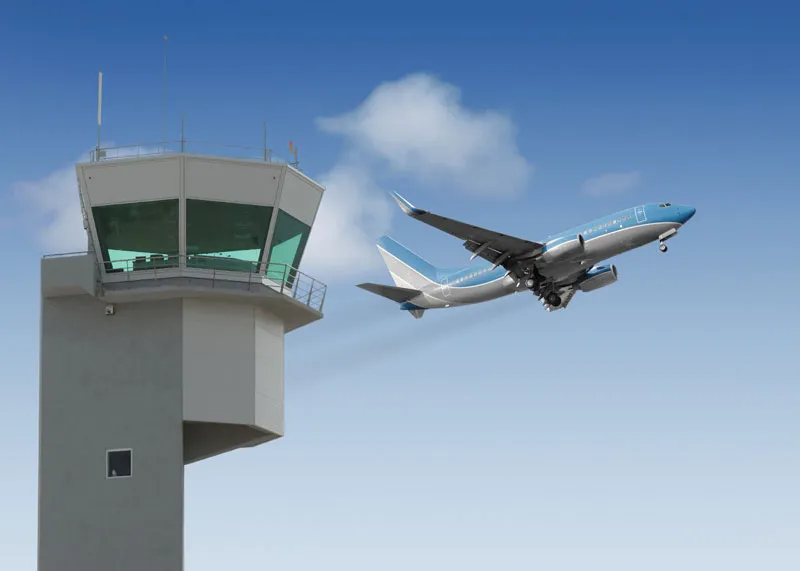
Commercial aviation is engineered around redundancy, standardization, and layered safety protocols. When an accident occurs, it is rarely attributable to a single failure; instead, it is typically the product of systemic breakdowns across human, mechanical, and procedural domains. Among those domains, air traffic control (ATC) plays a uniquely critical role. Controllers function as the central nervous system of the airspace—sequencing aircraft, preventing conflicts, and ensuring safe separation.
In the context of an Air Canada crash—or any commercial aviation incident—the legal concept of liability often turns on whether air traffic control acted within the standard of care required under federal aviation regulations and international protocols. When ATC negligence is present, it can significantly alter both the causation analysis and the allocation of liability.
his article examines how liability is analyzed in aviation crashes, with a focused lens on air traffic controller negligence, and the legal pathways available to victims and their families.
The Legal Framework Governing Aviation Liability
Aviation accidents involving international carriers such as Air Canada are governed by a combination of:
- International treaties, most notably the Montreal Convention
- Federal aviation regulations administered by the Federal Aviation Administration (FAA)
- National aviation authorities, including Transport Canada
- Domestic tort law principles, including negligence and wrongful death statutes
Under the Montreal Convention, airlines are subject to strict liability up to 151,880 Special Drawing Rights (SDRs) per passenger for bodily injury or death, a threshold updated by ICAO effective December 28, 2024, reflecting an approximately 18% increase over the prior 2019 limits. Beyond that threshold, liability operates on a ‘presumed fault’ basis with a reversed burden of proof: the carrier — not the plaintiff — must prove that the damage was not caused by its negligence or wrongful act, or that the damage was solely due to the negligence or wrongful act of a third party (Article 21(2)). Notably, the Convention’s liability limits are reviewed by ICAO at five-year intervals and adjusted for inflation under Article 24, ensuring compensation standards remain current. Because these limits govern the first tier of recovery in international aviation claims, understanding the applicable SDR threshold at the time of the incident is a critical step in any damages analysis.
However, when a crash involves multiple actors—such as pilots, airlines, manufacturers, and ATC—courts apply comparative fault principles, allocating percentages of responsibility across all contributing parties.
Understanding Air Traffic Control’s Duty of Care
Air traffic controllers are held to a high professional standard of care due to the life-and-death consequences of their decisions. Their responsibilities include:
- Maintaining safe separation between aircraft
- Providing accurate altitude and heading instructions
- Monitoring radar and traffic flow
- Issuing timely warnings of potential conflicts
- Coordinating with adjacent control sectors
Failure in any of these areas may constitute operational negligence, particularly when the deviation from protocol is clear and causally linked to the accident.
What Constitutes ATC Negligence?
To establish negligence, four elements must be proven:
- Duty – ATC owed a duty of care to the aircraft and passengers
- Breach – ATC failed to meet that duty
- Causation – The breach directly contributed to the crash
- Damages – Injury, death, or economic loss occurred
Examples of actionable ATC negligence include:
- Issuing incorrect altitude assignments leading to midair conflict
- Failing to alert pilots to converging traffic
- Miscommunication or ambiguous phraseology
- Radar monitoring failures
- Overloading sectors without proper staffing
- Delayed emergency response instructions
In aviation litigation, voice recordings, radar data, and controller logs are central to reconstructing these failures.
Case Study Framework: Air Canada Crash Analysis
While each aviation accident is fact-specific, liability analysis typically follows a structured investigative approach:
- Sequence Reconstruction
Investigators analyze flight data recorders (FDR) and cockpit voice recorders (CVR) to establish a timeline.
- ATC Communication Review
Transcripts and audio recordings determine whether:
- Instructions were accurate
- Warnings were timely
- Communication adhered to ICAO standards
- Human Factors Evaluation
This includes:
- Controller fatigue
- Cognitive overload
- Staffing levels
- Training adequacy
- Regulatory Compliance
Whether ATC adhered to FAA or Transport Canada procedures is critical. Deviations may strongly support negligence claims.
Shared Liability: Airline vs. Air Traffic Control
In many Air Canada crash scenarios, liability is not exclusive. Courts often divide responsibility among:
Airline / Flight Crew
- Pilot error
- Failure to follow ATC instructions
- Inadequate training
- Poor cockpit resource management
Air Traffic Control
- Improper instructions
- Failure to detect conflict
- Communication breakdown
Aircraft Manufacturer
- Design defects
- System malfunctions
Maintenance Providers
- Improper inspections
- Mechanical failures
The doctrine of comparative negligence allows courts to assign percentages—for example:
- 40% ATC negligence
- 35% pilot error
- 25% airline operational failure
This allocation directly impacts financial recovery.
The Critical Role of Causation
Even if ATC made an error, liability hinges on whether that error was a proximate cause of the crash.
For example:
- If a controller issued an incorrect altitude but the pilot corrected it in time, causation may not be established.
- Conversely, if the incorrect instruction created an unavoidable conflict leading to collision, causation is strong.
Aviation litigation often becomes a battle of expert testimony, with accident reconstruction specialists analyzing whether but-for causation and foreseeability are satisfied.
Government Liability and Sovereign Immunity
When ATC negligence is alleged in the United States, claims are typically brought against the federal government under the Federal Tort Claims Act (FTCA).
This introduces unique legal considerations:
- Strict procedural requirements
- Administrative claim prerequisites
- Limitations on damages in certain contexts
In Canada, similar claims may be brought against governmental aviation authorities, subject to statutory frameworks.
These cases are procedurally complex and require specialized aviation litigation experience.
Damages in Aviation Negligence Cases
Victims and families may recover:
- Wrongful death damages
- Loss of financial support
- Loss of companionship
- Pain and suffering
- Pre-impact terror (in some jurisdictions)
Under the Montreal Convention, damages can be substantial, particularly where negligence is clearly established.
Why ATC Negligence Cases Are Highly Technical
Unlike typical personal injury cases, aviation litigation involves:
- Multinational jurisdictional issues
- Complex regulatory frameworks
- Technical aviation data analysis
- Expert-heavy litigation
Establishing ATC negligence requires not only legal expertise but also deep familiarity with aviation operations, ICAO standards, and airspace management protocols.
The Broader Impact: Systemic Failures and Public Safety
When ATC negligence contributes to a crash, the implications extend beyond individual liability:
- Regulatory reforms may be implemented
- Air traffic procedures may be revised
- Technology upgrades (e.g., collision avoidance systems) may be accelerated
hese cases often drive industry-wide safety improvements, reinforcing accountability within aviation systems.
When to Seek Legal Representation
If you or a family member has been affected by an aviation incident involving Air Canada or any commercial carrier, immediate legal consultation is critical.
Early intervention allows counsel to:
- Preserve critical evidence
- Engage aviation experts
- Navigate international jurisdictional issues
- Protect your rights under applicable treaties
LLG National Law Group: Aviation Injury and Catastrophic Loss Representation
At LLG National Law Group — THE LEGAL TEAM WITH NATIONAL REACH AND LOCAL PRESENCE — we handle complex, high-stakes litigation involving catastrophic injuries and wrongful death.
Aviation cases demand precision, resources, and aggressive advocacy. Our team works with industry experts to analyze every aspect of liability, including air traffic control negligence, to ensure that responsible parties are held accountable.
Conclusion
Air Canada crash liability—like all aviation accident litigation—is rarely straightforward. However, when air traffic control fails to meet its obligations, that failure can become a central pillar of liability.
Understanding how ATC negligence fits into the broader legal framework is essential for victims seeking justice. These cases are not just about compensation—they are about accountability, safety, and preventing future tragedies.
If you are navigating the aftermath of an aviation disaster, the path forward requires experienced legal guidance and a firm prepared to litigate at the highest level.